Roland SRV 3030 24-bit Digital Reverb
330.-
15.04.2026


8001, Zurich
Roland SRV 3030 24-bit Digital Reverb
Neu / Ungebraucht !!
Kann selbstverständlich getestet werden!
Mehr Bilder können auf Wunsch gemailt werden!
Verkauf Preis Fr.330
Versand möglich: Post Fr. 10.-
Roland has been making high-quality effects processors for more than 15 years and several of its early classics (DEP-5, others) are still in use in studios. Today, Roland's SRV and SDE processors continue to capture a respectable share of the effects market. The company's latest reverb processor - the SRV-3030 - offers a powerful feature set, simple controls and balanced I/O.
Roland has been making high-quality effects processors for more than 15 years and several of its early classics (DEP-5, others) are still in use in studios. Today, Roland?s SRV and SDE processors continue to capture a respectable share of the effects market. The company?s latest reverb processor ? the SRV-3030 ? offers a powerful feature set, simple controls and balanced I/O. I reviewed the SRV-3030D with S/PDIF digital I/O ($995).
Product PointsApplications: Studio recording; live sound reinforcement
Key Features:
? Dual processor engines;
? modulation effects;
? Roland Sound Space (RSS) algorithm;
? three-level editing;
? built-in preview sounds;
? balanced analog I/O;
? S/PDIF digital I/O (SRV-3030D)
The SRV-3030D is a single-rack-space processor with memory card slot for storing additional programs, large backlit LCD, four data entry knobs and a handful of buttons. With XLR balanced inputs and outputs, as well as 1/4? balanced jacks, the SRV-3030D?s I/O is definitely one step above the common budget processor. Add in S/PDIF digital input and output, and the SRV-3030D integrates into most any studio setup. Expression pedal and footswitch jacks enhance the unit?s flexibility in live performance situations.
In keeping with a common trend, the SRV-3030D has two processing engines (units) the user can configure for true stereo, parallel or series operation. The reverb processors can be set to generate a standard reverb effect, gated reverb, nonlinear reverb or ambience ? these reverb modes also offer several variations within each type. Each reverb unit has a compressor on its input and fully parametric three-band EQ on its output.
The SRV-3030D also offers two other processor engines designed to enhance the reverb effect. One stereo modulation processor generates resonator, phaser or flange/chorus effects. The Roland Sound Space (RSS) processor is designed to widen the perceived stereo width beyond the speakers. Roland claims it can even make sounds appear to come from behind or above the listener. You can place the effects and RSS processors independently so they affect the unit A output, unit B output or both.
Though the SRV-3030D offers an impressive level of depth and flexibility, Roland made an obvious effort to keep operation as simple as possible. The processor offers three editing modes, each with progressively greater levels of control. The simplest way to alter a reverb program is to twist one of the three control knobs from the main program screen, two of which are devoted to reverb level and reverb time (the third knob is assignable per program).
The Roland?s EZ Edit button enters the second level of editing, which offers three different parameter pages. Each page re-maps the three control knobs for a different purpose, often simplifying and combining parameters on a single knob. In EZ Edit mode, for example, the room size control changes early reflection time ratio, reverb size, output pan width and several other parameters. One could stop at the EZ Edit level and accomplish the majority of the tweaks required to dial in a reverb sound.
Übergabe: Abholung und Versand
Zustand: Neu
Neu / Ungebraucht !!
Kann selbstverständlich getestet werden!
Mehr Bilder können auf Wunsch gemailt werden!
Verkauf Preis Fr.330
Versand möglich: Post Fr. 10.-
Roland has been making high-quality effects processors for more than 15 years and several of its early classics (DEP-5, others) are still in use in studios. Today, Roland's SRV and SDE processors continue to capture a respectable share of the effects market. The company's latest reverb processor - the SRV-3030 - offers a powerful feature set, simple controls and balanced I/O.
Roland has been making high-quality effects processors for more than 15 years and several of its early classics (DEP-5, others) are still in use in studios. Today, Roland?s SRV and SDE processors continue to capture a respectable share of the effects market. The company?s latest reverb processor ? the SRV-3030 ? offers a powerful feature set, simple controls and balanced I/O. I reviewed the SRV-3030D with S/PDIF digital I/O ($995).
Product PointsApplications: Studio recording; live sound reinforcement
Key Features:
? Dual processor engines;
? modulation effects;
? Roland Sound Space (RSS) algorithm;
? three-level editing;
? built-in preview sounds;
? balanced analog I/O;
? S/PDIF digital I/O (SRV-3030D)
The SRV-3030D is a single-rack-space processor with memory card slot for storing additional programs, large backlit LCD, four data entry knobs and a handful of buttons. With XLR balanced inputs and outputs, as well as 1/4? balanced jacks, the SRV-3030D?s I/O is definitely one step above the common budget processor. Add in S/PDIF digital input and output, and the SRV-3030D integrates into most any studio setup. Expression pedal and footswitch jacks enhance the unit?s flexibility in live performance situations.
In keeping with a common trend, the SRV-3030D has two processing engines (units) the user can configure for true stereo, parallel or series operation. The reverb processors can be set to generate a standard reverb effect, gated reverb, nonlinear reverb or ambience ? these reverb modes also offer several variations within each type. Each reverb unit has a compressor on its input and fully parametric three-band EQ on its output.
The SRV-3030D also offers two other processor engines designed to enhance the reverb effect. One stereo modulation processor generates resonator, phaser or flange/chorus effects. The Roland Sound Space (RSS) processor is designed to widen the perceived stereo width beyond the speakers. Roland claims it can even make sounds appear to come from behind or above the listener. You can place the effects and RSS processors independently so they affect the unit A output, unit B output or both.
Though the SRV-3030D offers an impressive level of depth and flexibility, Roland made an obvious effort to keep operation as simple as possible. The processor offers three editing modes, each with progressively greater levels of control. The simplest way to alter a reverb program is to twist one of the three control knobs from the main program screen, two of which are devoted to reverb level and reverb time (the third knob is assignable per program).
The Roland?s EZ Edit button enters the second level of editing, which offers three different parameter pages. Each page re-maps the three control knobs for a different purpose, often simplifying and combining parameters on a single knob. In EZ Edit mode, for example, the room size control changes early reflection time ratio, reverb size, output pan width and several other parameters. One could stop at the EZ Edit level and accomplish the majority of the tweaks required to dial in a reverb sound.
Übergabe: Abholung und Versand
Zustand: Neu
- Prix CHF
- 330.-
- NPA
- 8001
Annonces similaires
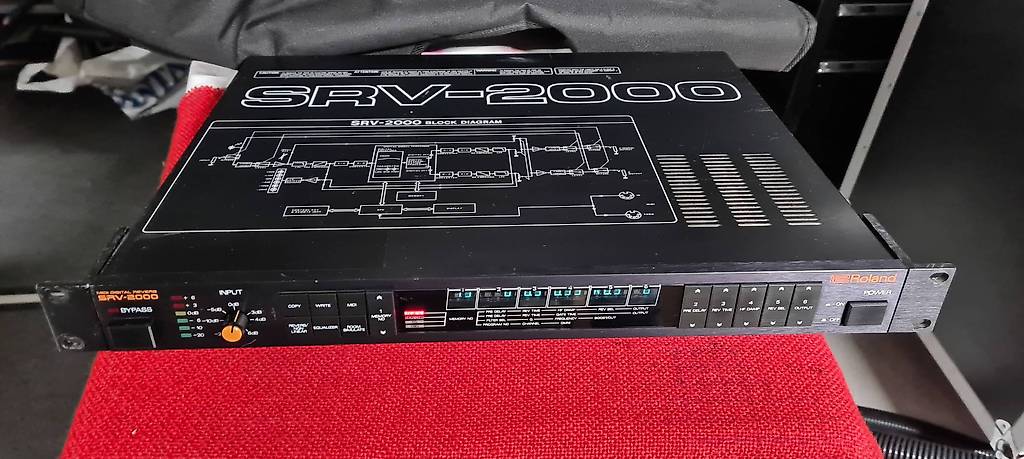
Roland SRV-2000 MIDI Digital Reverb Effect Processor,Vintage
370.-
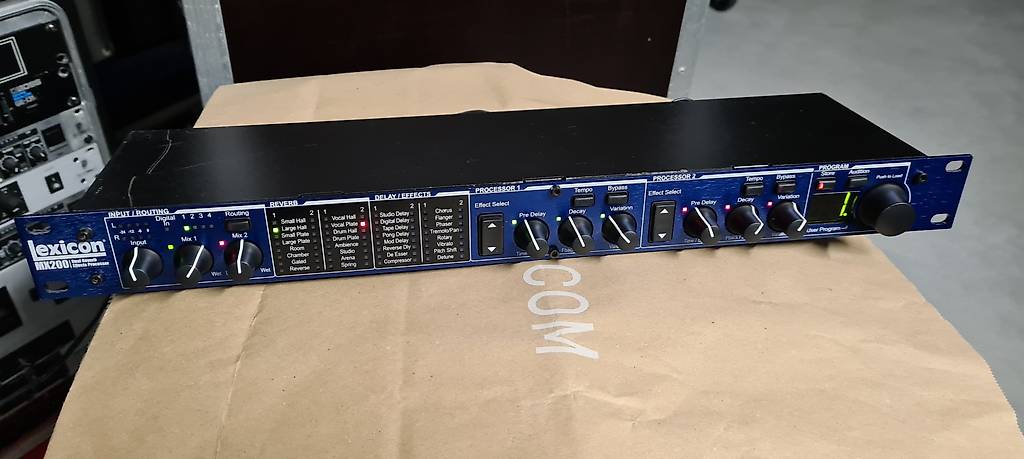
Lexicon MX200 Dual Reverb FX-Prozessor
239.-
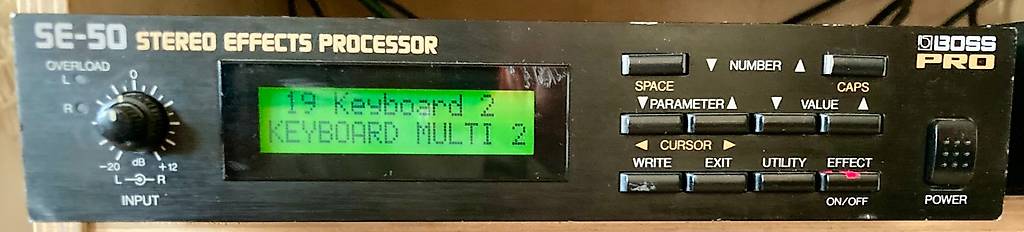
Boss SE-50 stereo multi-effects processor
120.-
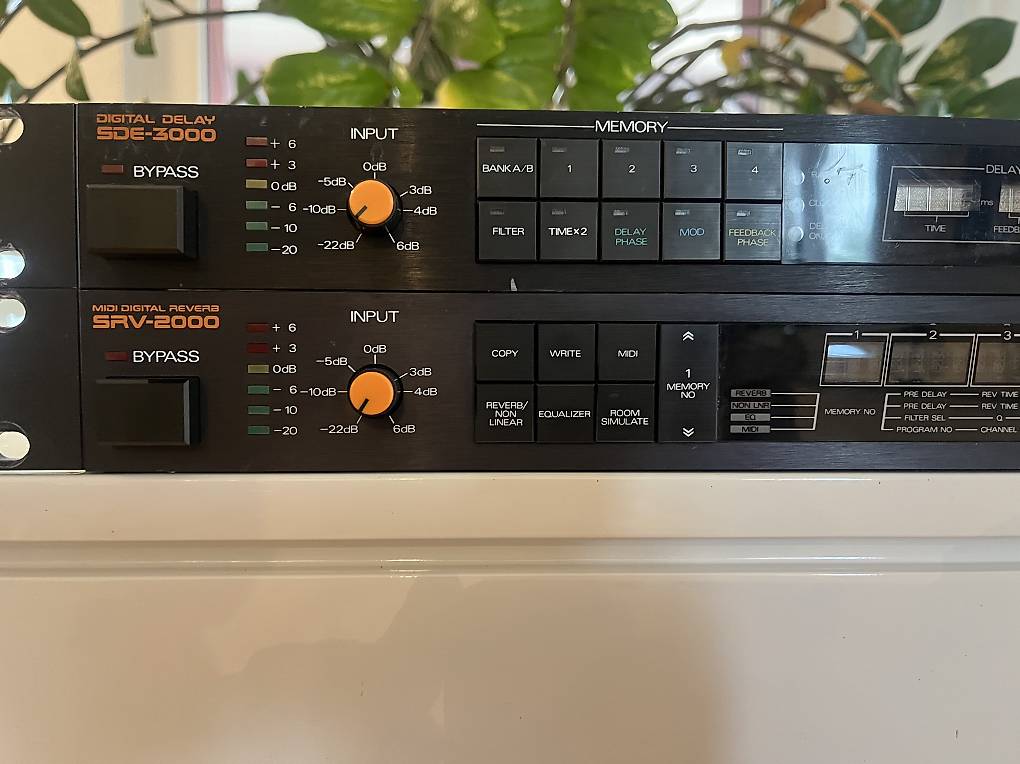
Roland MIDI Digital Reverb SRV-2000
280.-
EQ, diverse / DBX , DOD, Yamaha ,Klark Teknik, McLelland Ge
85.-
Alesis MicroVerb 4 18-Bit Signal Processor
135.-
Roland C30 Digital Harpsichord
2 600.-
Roland bk 5
420.-
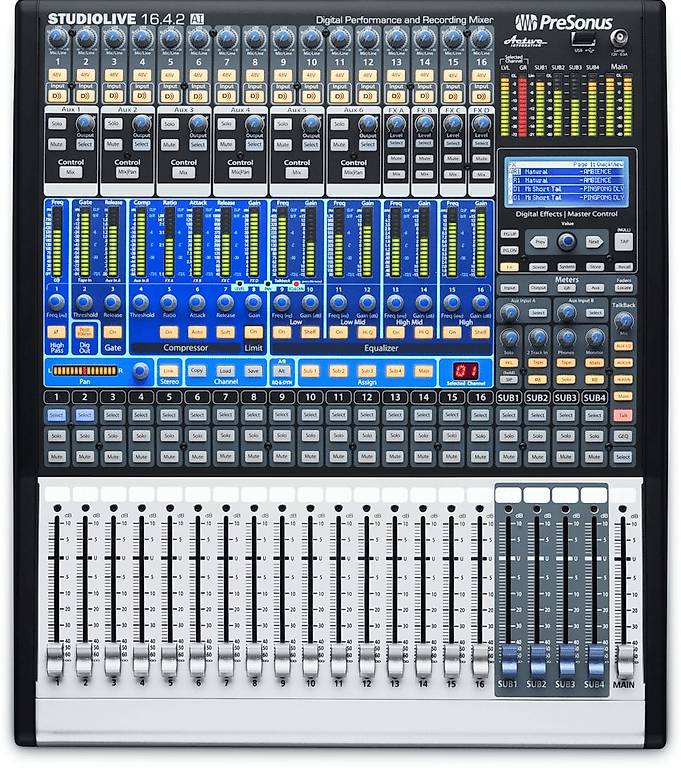
Table de Mixage Presonus Studio Live 16.4.2AI + Accessoires
750.-
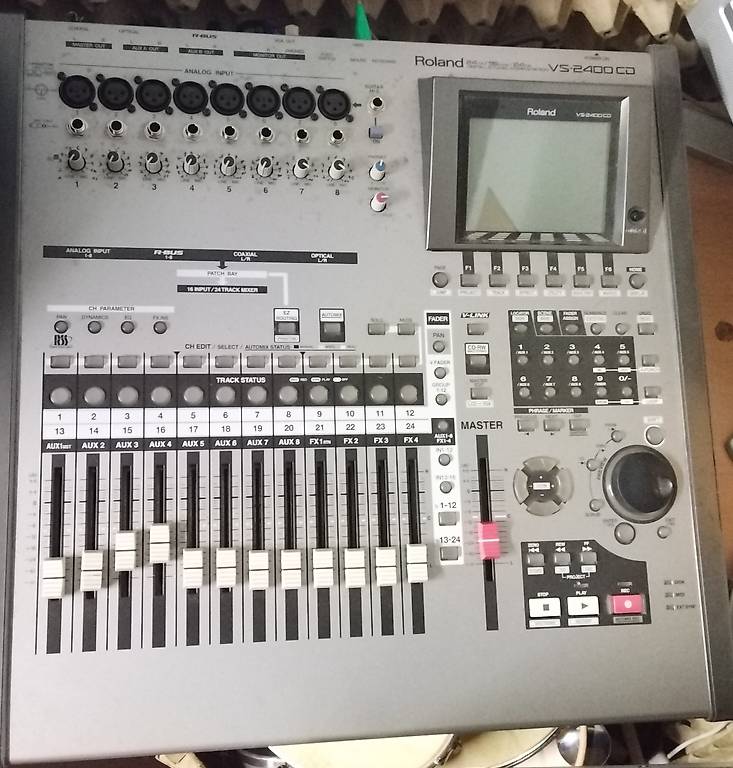
Roland VS-2400CD Enregistreur multipiste en très bonne état
380.-
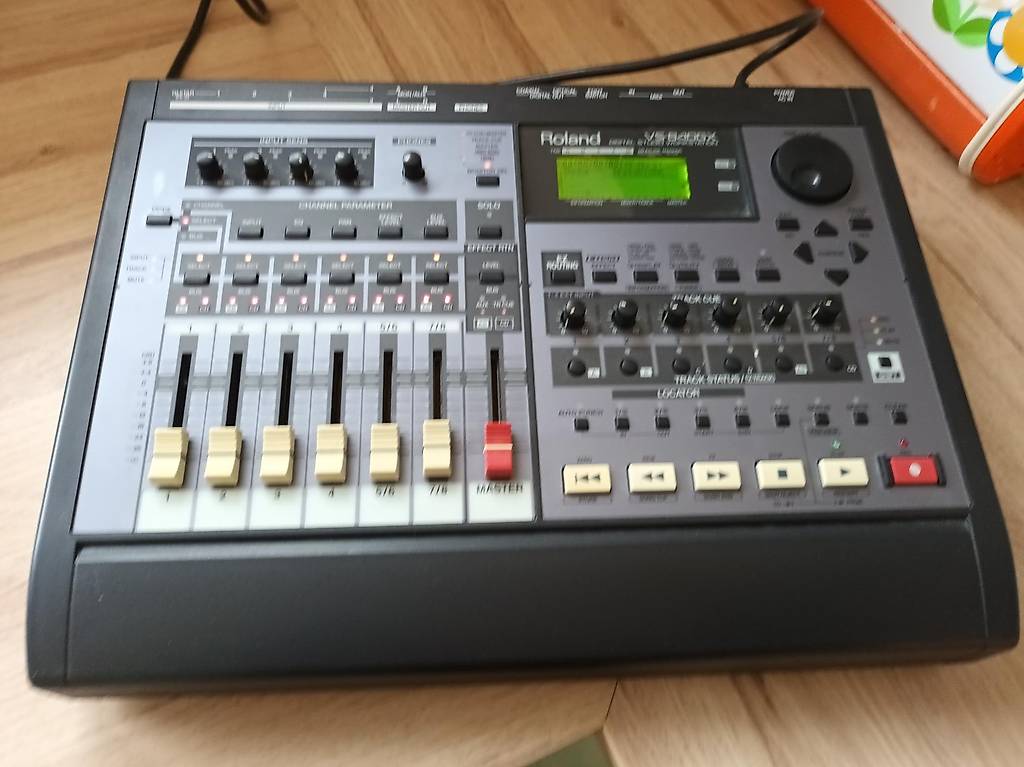
Enregistreur 8 pistes Roland VS-840GX
150.-
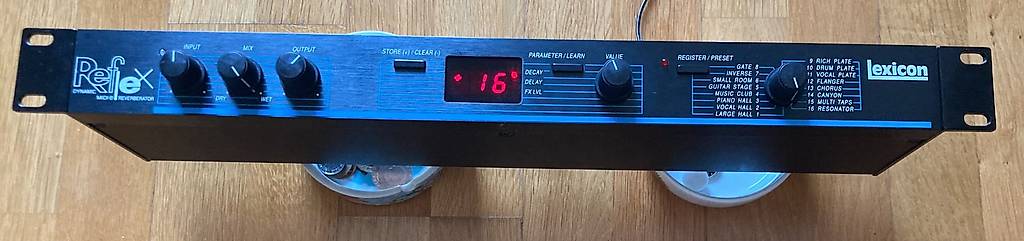
Lexicon Reflex Effects Processor Vintage Reverb Delay w/ PSU
150.-
Roland GR-30 Guitar Synthesizer Multi Effects Pedal
100.-
Soundmachines SD1 Simple Drum
115.-
Free The Tone - AMBI SPACE AS-1R DIGITAL REVERB
270.-
Informations légales
Français


© SMG Swiss Marketplace Group AG 2026.


La duplication et l'appropriation des annonces par des tiers, en particulier des photos et des données personnelles qu'elles contiennent, portent atteinte aux droits associés et sont strictement interdites.